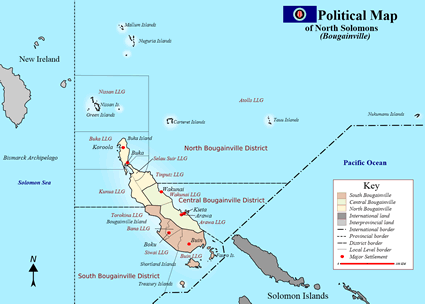
The Nissan people of Papua New Guinea are the indigenous inhabitants of a remote coral atoll group in the Solomon Sea known as the Green Islands, comprising primarily Nissan Island and nearby smaller atolls. Their ancestors have lived in this island environment for many generations, sustaining a culture adapted to life by the sea. European contact began in the early 1600s with Dutch and later European explorers charting the islands, followed in the 20th century by administrative changes under colonial and national governance. During World War?II, Allied forces played a role in the region's history, with Nissan Island being occupied and later involved in military operations. Local social structures and ways of life have persisted alongside external influences over time.
The Nissan people live in small village communities closely tied to the sea and the natural environment of their atolls. Subsistence activities such as gardening staple crops and fishing remain central to daily life, and travel to and from the islands depends on often challenging boat journeys. Traditional technologies and village-level crafts, including construction of houses and canoes, reflect a long-standing adaptation to island life. Islanders generally speak the Nehan language, sometimes alongside regional lingua francas. Access to modern infrastructure and services is limited by the geographic isolation of their home islands.
Most of the Nissan people identify as Christian. While many participate in Christian worship and community life, traditional beliefs and cultural practices continue to exist alongside their Christian faith. Careful description of these traditional belief elements recognizes that local spiritual customs may be present without portraying them as spiritually beneficial or culturally idealized. Scripture in the Nehan language, including a New Testament, is available and used by believers among the Nissan people.
Isolation and limited access to services contribute to practical needs among the Nissan communities. Assistance with health care access, education, and resilience to environmental challenges such as variable weather and potential food insecurity are ongoing concerns. Spiritually, growth in the depth of discipleship, access to Christian resources in the Nehan language, and support for local believers as they live out their faith within their cultural context are needs that many workers and prayer partners recognize.
Pray for the Nissan believers to grow in their understanding of and commitment to Jesus Christ, rooted in solid teaching and regular engagement with scripture. Pray for church leaders and families as they seek to be faithful witnesses in their communities. Pray that practical needs—such as health, education, and environmental resilience—would find constructive, community?led solutions.
Pray for opportunities for the people of Nissan to share the hope they have with those nearby so that everyone has the chance to enjoy life to the full (John 10:10).
Scripture Prayers for the Nissan in Papua New Guinea.
| Profile Source: Joshua Project |